February 4, 2026
In electronic ceramic manufacturing, temperature accuracy and repeatability directly determine product yield and electrical performance. Modern ceramic producers increasingly require firing equipment capable of maintaining stable thermal profiles across long production cycles. The High-Temperature Electric Heating Plate Furnace answers this demand with advanced multi-zone temperature control and automated operation.
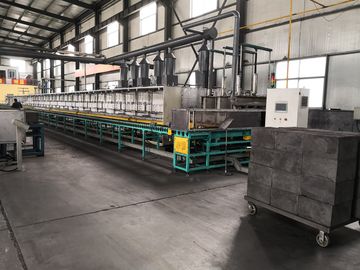
The furnace is engineered with 5–8 independent heating zones and 10–16 temperature control points, enabling precise thermal gradient management along the firing chamber. Upper and lower temperature zones are independently regulated, ensuring uniform heat penetration for thick or complex ceramic components.
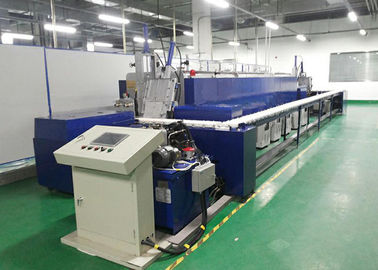
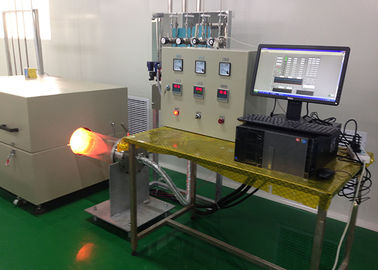
At the heart of the control system is an SCR-controlled power supply combined with PID intelligent instruments. This configuration allows continuous temperature adjustment with minimal fluctuation, even during extended high-temperature operation. A PLC-based control system with touch screen interface provides real-time monitoring, alarm functions, and data recording—key features for quality traceability and process optimization.
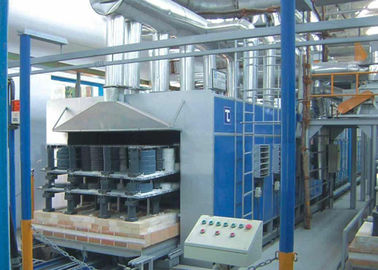
Supporting continuous push-plate firing, the furnace accommodates standard ceramic setters such as 250 mm * 250 mm and 320 mm * 320 mm, with additional sizes available on request. The hydraulic propulsion system ensures smooth, synchronized plate movement, reducing mechanical stress and maintaining consistent firing cycles.
| Item | Value |
|---|---|
| Chamber Length | 9–15 meters |
| Operating Temperature | 1400–1600 °C |
| Max Temperature | 1700 °C |
| Temperature Uniformity | ±5 °C |
| Heating Zones | 5–8 |
| Control Points | 10–16 |
| Control Mode | SCR + PID + PLC |
| Heating Element | Silicon molybdenum rod |
| Feeding Mode | Single / Double push plate |
This furnace is widely used for alumina ceramics, zirconia components, and high-frequency electronic ceramics, offering excellent consistency for large-scale production. By combining precision temperature control with automation, manufacturers can significantly reduce scrap rates, improve dimensional accuracy, and stabilize long-term production output.